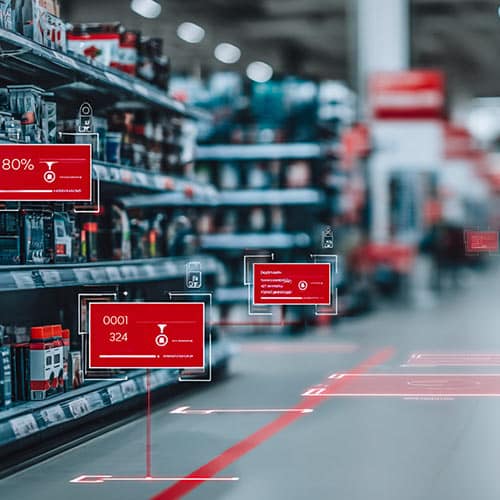
An international chain of convenience stores with 9,799 stores in North America (primarily in the United States and Canada), 2,697 stores in Europe, and an additional 2,380 stores operating under franchise agreements worldwide. Supplying the everyday necessities for your fridge, your family, your first aid kit or your traveling tool box.
THE CHALLENGE
The customer required RGIS to provide the following:
- Encourage store level merchandising
- Store clustering so that product assortments, size allocations, and promotional offers can be localised as required
- Seamless links to third party applications
- Improve management control of store space planning
- 3D modelling of store merchandising layouts
- To complete a total of 2,380 stores
Recent Case Studies
- Improving Retail Inventory Control with a Flexible U Count Solution
- Evolving Central Checking Through 15 Years of Supply Chain Partnership
- Comprehensive Stock Auditing for the Automotive Sector
- Industrial Inventory Count Across Five Complex Warehouse Zones
- Delivering a Global Enterprise Inventory Solution Across 13 Manufacturing Plants
Why RGIS?
A convenience store retailer required the ability to analyse and report on store layouts, sales, profit and margin performance.

Our Solutions
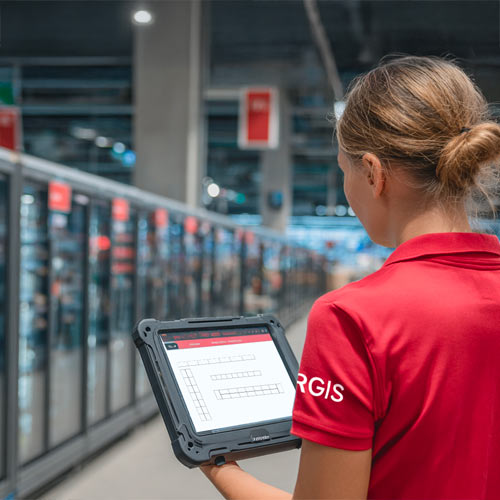
The convenience store retailer partnered with RGIS to complete the macro space planning project, and RGIS provided the following:
A macro space planning management solution was created
Store spatial values including fixtures and planograms
Equipment types and numbers of fixtures
Planogram to aid with store allocation
Performance reports created geographically and by store size
Capability for users to customise and create reports
Results
The convenience store retailer found by outsourcing the macro space planning project to RGIS, the following results were achieved:
Improved individual store and company-wide performance
Significantly cut store planning approvals
Reduced implementation costs
Made product realignment, refits and new store builds, more efficient with less costs
Full integration with SAP system and third party application

Conclusion
By partnering with RGIS, the convenience store retailer transformed its approach to macro space planning across all 2,380 stores. The implementation of a centralised, data-driven planning solution enabled improved merchandising control at store level, smarter store clustering, and more precise localisation of assortments and promotions. Seamless integration with SAP and third-party systems ensured data consistency and operational alignment, while 3D modelling and customisable performance reporting enhanced visibility and decision-making. As a result, store planning approvals were accelerated, implementation costs reduced, and refits and new store builds executed more efficiently—driving measurable improvements in both individual store performance and overall estate management.