Here is a simple guide to some of the most common retail terms you may encounter.
1. SKU (Stock Keeping Unit)
A Stock Keeping Unit (SKU) is a unique identifier assigned to a product or service by a retailer. Think of it as a product’s fingerprint.
SKUs help retailers manage inventory and track sales. They also distinguish between product variations. For example, a red T-shirt and a blue T-shirt may have different SKUs, even if they are the same brand and size.
2. UPC (Universal Product Code)
A Universal Product Code (UPC) is a 12-digit barcode commonly used to identify products.
The code contains information about the manufacturer and the individual product. It also includes a check digit, which helps verify the code when scanned.
UPCs are widely used in supermarkets, department stores and other retail environments, particularly in the United States.
3. EAN (European Article Number)
An EAN is a barcode used to identify products. It works in a similar way to a UPC and is widely used across Europe and other international markets.
EANs usually contain 13 digits, although some versions contain 14. They allow retailers to identify, scan and track products efficiently.
4. Assortment
Assortment refers to the range of products offered within a particular category.
For example, a sports retailer may stock running shoes in different brands, styles, sizes and colours. Each variation may have its own SKU.
A wider assortment gives customers more choice within that product category.
5. Category
Retailers organise products into categories based on similar characteristics or uses.
For example, categories might include men’s shirts, women’s shoes, electronics or fresh produce.
Organising products into clear categories helps retailers manage stock, analyse sales and plan store layouts.
6. Variety
Variety describes the number of different product categories available within a store or department.
A large department store may offer dozens of categories. In contrast, a specialist retailer may focus on a much smaller number.
7. Backup Stock (Buffer Stock / Safety Stock)
Backup stock is additional inventory kept in reserve. It is also known as buffer stock or safety stock.
Retailers use it to protect against unexpected increases in demand or delays in deliveries. Having sufficient backup stock can reduce the risk of products becoming unavailable.
8. Space Management
Space management is the process of planning how selling space is used within a store.
Retailers use sales data, customer demand and shopping behaviour to decide where products should be displayed. For example, popular products may be positioned at eye level or in prominent locations.
Effective space management can improve product visibility and make better use of available selling space.
9. Planogram
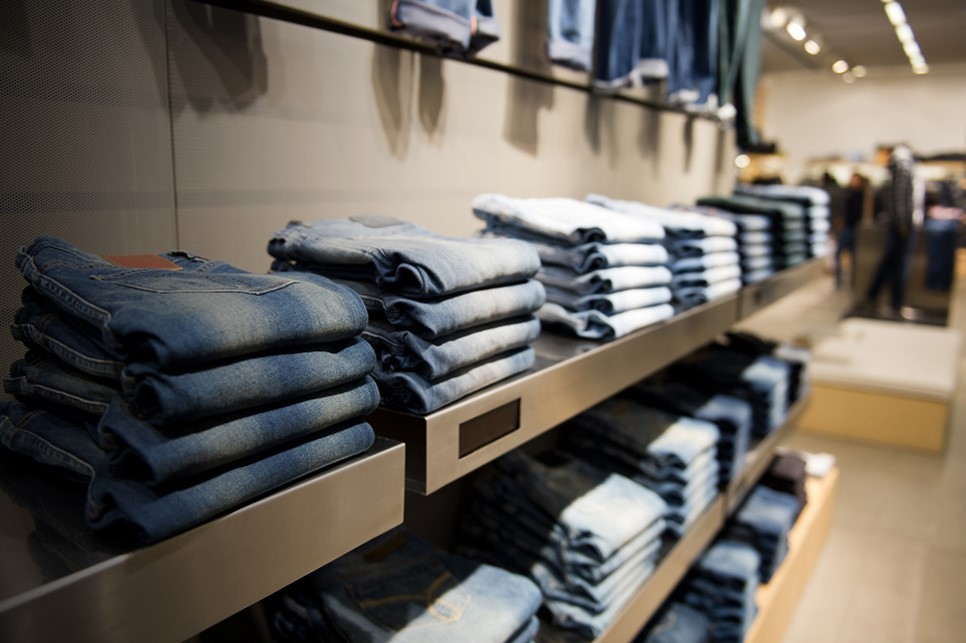
A planogram is a visual guide showing where products should be positioned on shelves and displays.
It can specify the location, number of facings and position of individual products. Retailers use planograms to create consistent displays across stores and make effective use of selling space.
10. Shrinkage
Shrinkage is the difference between the inventory a retailer expects to have and the amount actually available.
It can result from theft, damage, administrative errors, incorrect deliveries or misplaced stock.
Regular and accurate stocktakes can help retailers identify shrinkage and understand where inventory discrepancies are occurring.
11. Stockout
A stockout occurs when a product is unavailable when a customer wants to buy it.
Stockouts can result in lost sales and a poor customer experience. Accurate inventory records can help retailers identify low stock levels and replenish products before they run out.
12. Omni-Channel
Omni-channel retail brings different sales and communication channels together to create a consistent customer experience.
These channels can include physical stores, websites, mobile apps and social media. Customers may move between several channels during a single purchase.
For example, a customer might research a product online before buying or collecting it from a store.
13. PLC (Product Life Cycle)
PLC stands for Product Life Cycle. It describes the different stages a product typically goes through during its time on the market.
The main stages are introduction, growth, maturity and decline.
Understanding the product life cycle can help retailers plan stock levels, promotions and pricing decisions.
14. POS (Point of Sale) / EPOS (Electronic Point of Sale)
Point of Sale (POS) is the location where a retail transaction takes place. In a physical store, this is usually the checkout.
Electronic Point of Sale (EPOS) refers to the technology used to process the transaction. This can include barcode scanners, payment terminals and till systems.
Modern EPOS systems can also provide retailers with valuable sales and inventory data.
15. Electronic Shelf Labels (ESLs)
Electronic Shelf Labels (ESLs) are digital displays that replace traditional paper shelf labels.
They connect to a central system, allowing retailers to update prices and product information electronically. This reduces the need to replace paper labels manually.
ESLs can also improve pricing accuracy and help retailers manage frequent price changes more efficiently.
Conclusion
Understanding retail terminology makes it easier to communicate and manage day-to-day operations. Terms such as SKU, shrinkage, planogram and ESL are also closely connected to inventory accuracy.
Understanding how these areas work together can help retailers improve stock control, customer service and operational efficiency.