
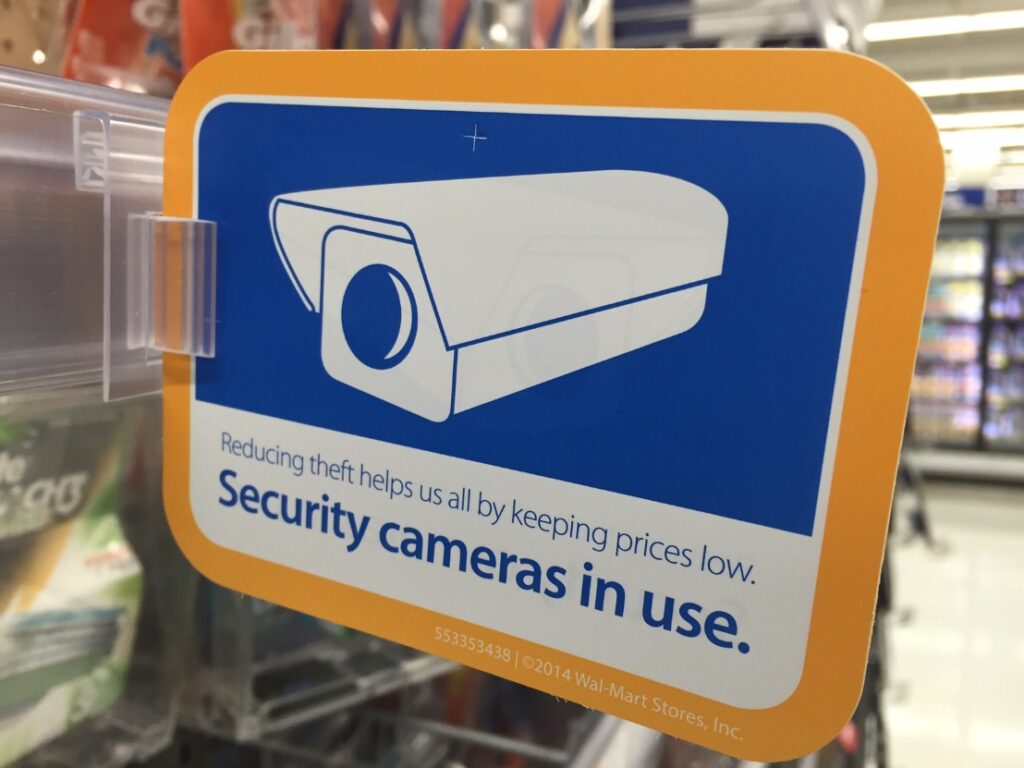
Retail theft has reached record levels. The British Retail Consortium‘s (BRC’s) crime survey recorded more than 20 million theft incidents reported by UK retailers in 2023/24. These incidents cost the industry £2.2 billion, a 22% increase on the previous year. Globally, the picture is equally alarming. US retailers experienced a 93% increase in average shoplifting incidents between 2019 and 2023.
Against this backdrop, understanding which loss prevention strategies actually work has never been more important. A comprehensive 2016 review of publicly available research, spanning 30 to 40 years of literature, examined six key methods used by retailers to deter would-be offenders. In the years since, new data, emerging technologies, and a dramatically changed retail landscape have both reinforced and complicated those original findings.
This article brings together the original research with the latest available evidence and highlights where thinking has moved on. Risk amplification remains central to the research. It increases offenders’ concerns about getting caught. The more credible and visible the deterrents, the less likely a theft is to occur. What has changed is the scale of the challenge, the nature of those offenders, and the technology now available to respond.
1. Security Tagging Technologies
Security tags remain one of the most widely recognised retail loss prevention tools. And the evidence base from the 2016 review remains broadly positive, with important caveats that still apply:
- Tags must be highly visible, or their presence must be clearly advertised on product packaging.
- Hard tags outperform soft tags in deterring theft.
- Tagging is significantly more effective against opportunistic shoplifters than organised retail crime groups.
- The technology still faces a credibility problem: frequent false alarms and inconsistent responses at store exits undermine its deterrent effect.
Since 2016, RFID (Radio Frequency Identification) tagging has become much more common in retail environments. RFID helps deter theft while providing real-time inventory tracking. Retailers such as US retailer Macy’s have used RFID for more than a decade to improve stock visibility and identify when and where products go missing.
However, RFID and other tagging technologies face growing challenges from organised retail crime.
Organised retail crime increased by 18% in the first half of 2023. Professional criminal groups often bypass or defeat standard tagging systems. As a result, tags remain far more effective against opportunistic shoplifters than organised retail crime groups.
Despite these challenges, visible tagging continues to play an important role in retail loss prevention when combined with other security measures.
For further information on tagging standards, please see ECR Loss Group or British Retail Consortium
2. CCTV in Retail Environments
The 2016 review found the evidence for CCTV’s direct impact on retail losses largely inconclusive, while noting its indirect value in giving staff confidence to challenge suspicious behaviour. That overall assessment still holds, but the technology has fundamentally changed.
Traditional CCTV is increasingly being replaced or augmented by AI-powered video analytics, which move surveillance from passive recording to active detection. AI-driven video systems help retailers spot suspicious behaviour more quickly, enabling faster intervention. Advanced analytics can detect unscanned items, flag concealment attempts, and recognise irregular movement near high-risk shelves.
Early deployment data is encouraging. One major fashion retailer reported a reduction in theft losses of more than 50% within a year after deploying AI video analytics across 183 stores. However, vendor-reported figures should always be interpreted with caution.
The same limitation identified in 2016 still applies: CCTV and AI surveillance are far stronger deterrents for opportunistic offenders than for organised criminal groups, who are increasingly sophisticated in their methods. And the fundamental challenge of credibility, a system that detects theft but produces no timely response, remains a weakness regardless of how advanced the technology becomes.
The additional dimension since 2016 is the use of facial recognition, which enables retailers to identify repeat offenders. This brings significant potential benefits but also raises important legal and ethical considerations, particularly in the UK under GDPR and in Europe under the emerging EU AI Act framework.
3. Signage, Product Stickers and Anti-Theft Campaigns
The 2016 review found signage and awareness campaigns to be the weakest of the six categories. Most studies were outdated, and the latest study available at the time (2011) found no measurable impact on theft. Since then, little new evidence has emerged to support signage as a standalone deterrent.
Signage continues to play a supporting role within a broader risk amplification strategy, particularly when it makes other measures (CCTV, tagging, security staff) more visible or credible. On its own, however, it should not be relied upon as a primary retail loss prevention strategy.
This remains an area in clear need of updated, well-designed research.
4. Security Guards and Sales Staff
Of all six measures, people remain the most consistently effective deterrent. This finding has only been reinforced by more recent research and industry data.
Key findings from the original review still hold:
- Security guards are effective, but only when mobile and positioned close to potential offenders.
- Acknowledging customers is a powerful deterrent, reducing the anonymity offenders rely on.
- Staff deter both opportunistic and professional thieves, making this the most versatile tool available.
Since 2016, however, the role of retail staff has become considerably more complex. The BRC’s Annual Crime Survey found that violent or abusive incidents against retail workers climbed to over 2,000 per day in 2023/24, more than three times the level recorded in 2020. Figures from the trade union Usdaw show that 77% of workers reported verbal abuse in the 12 months to December 2024, 53% received threats of violence, and 10% were physically assaulted.
This creates a serious tension at the heart of people-based prevention. Customer engagement remains highly effective, but with 88% of retail brands reporting that shoplifters have grown more aggressive and violent, the question of how staff approach suspicious behaviour requires careful rethinking. Staff empowerment must now be balanced with staff safety, a factor the 2016 review did not need to consider to the same degree.
The UK government has acknowledged this shift. The Crime and Policing Bill 2025 introduced a bespoke offence of assaulting a retail worker, and police committed in 2023 to prioritise attendance where violence has been used against shopworkers.
5. Store Design, Layout and Mirrors
The physical design of a store plays a foundational role in whether other loss prevention measures can function effectively. The research highlights several important principles:
- Good store design creates the conditions in which other measures, CCTV, security staff, and tagging can operate effectively.
- Staff must have a clear line of sight across the store, particularly to high-risk product areas. High shelving, narrow aisles and cluttered displays all undermine visibility.
- Store layouts should actively support surveillance, making it easier for both staff and cameras to monitor activity.
- Mirrors may be ineffective as a deterrent and could help offenders track staff.
Retailers undertaking a store refurbishment should treat loss prevention as a design priority from the outset, not an afterthought.
6. Shelf-Based Measures
In 2016, only one poorly designed study existed in this area, showing that slowing the removal of products from shelves, combined with an alert each time a product was taken, significantly reduced shrinkage without affecting sales. The evidence base has since grown, though it remains underdeveloped compared to other measures.
The most significant development in shelf-level loss is the rise of self-checkout, which has effectively moved the point of loss from the shelf to the checkout. Research from checkout-technology company Grabango found that self-checkout machines are responsible for shrinkage amounting to 3.5% of sales, more than 16 times the loss rate of traditional cashiers. According to World Metrics in 2023, there were 2.1 million self-checkout theft incidents reported to retailers, up from 1.4 million in 2020.
Retailers are responding with AI-enhanced checkout monitoring. In 2023, deployment of AI-powered self-checkouts by Easy Flow across 27 stores in Europe processed over 2 million transactions and identified more than 32,000 theft incidents, demonstrating the potential of technology to address this growing vulnerability. Some major retailers have gone further, adding shelf shields and scaling back self-checkout in favour of staffed lanes, reinforcing once again the deterrent value of human presence at the point of transaction.
7. Organised Retail Crime
The 2016 review focused largely on individual opportunistic theft. Since then, organised retail crime (ORC) has emerged as a fundamentally different and far more serious threat that challenges every intervention category.
ORC cases increased 18% in the first half of 2023 compared to the same period in 2022, with the top 15 cases alone totalling $180 million in stolen merchandise. In the UK, what was once primarily opportunistic theft has evolved into sophisticated criminal enterprises, with industry reports from publications like Get Licensed documenting gangs arriving at stores with wheelie bins and builder’s bags, systematically clearing entire sections of high-value merchandise.
Almost every intervention reviewed in 2016 is less effective against organised groups than against opportunistic individuals, a consistent finding that now has far greater practical consequences. Addressing ORC requires a different approach: greater collaboration between retailers, law enforcement, and online marketplaces (through which stolen goods are increasingly fenced), as well as investment in intelligence-led prevention rather than purely reactive security measures.
What the Evidence Tells Us Overall: 2016 vs 2026
- No single loss prevention measure is sufficient on its own.
- Staff remain the most effective deterrent.
- Organised retail crime continues to grow.
- RFID and AI technologies offer new opportunities for prevention.
- Store design plays a critical role in supporting visibility and surveillance.
- Retailers should adopt a layered approach combining people, processes and technology.
The 2016 review reached three key conclusions. No single intervention is sufficient; people remain the most versatile deterrent, and store design supports everything else.
Changes in the 2026 Review
What has changed is the context in which those conclusions must be applied:
- The scale of theft has grown dramatically, with UK losses reaching £2.2 billion and global losses in the hundreds of billions.
- Organised retail crime has become a dominant threat, against which most traditional interventions are significantly less effective.
- Technology has advanced significantly, particularly in AI-powered surveillance and RFID tracking, though rigorous independent evidence of their effectiveness is still catching up with commercial claims.
- Staff safety has become a critical variable, complicating the deployment of people-based prevention strategies.
- Self-checkout has introduced a significant new vector for loss that did not feature in the 2016 review.
The recommendations in the 2026 Review
For retailers, the evidence continues to point toward a layered approach:
- Invest in your people, but protect them too
- Design your space for visibility
- Use technology as a complement to human vigilance rather than a replacement for it.
The original research underpinning sections 1–6 was published in 2016 by the ECR Loss Group. Updated statistics and context have been added from the British Retail Consortium Annual Crime Survey 2024, the NRF Retail Security Survey 2023, the NRF Impact of Retail Theft & Violence 2024, and other publicly available sources. For further information on the original report, contact RGIS.
If you want to speak with our RGIS experts on inventory tracking or installation of security measures, such as shelf shields or security gates, please contact us.